
Learning that builds strong foundations.
The Great Vision School follows the CBSE pattern in English medium, teaching children from Nursery to Class 8. Our academic programme focuses on conceptual understanding, thoughtful teaching, and the steady development of every learner.
Beyond completing the syllabus, we want children to ask questions, understand ideas, communicate clearly, and develop the confidence to keep learning.
Growing one stage at a time.
Early Years
Nursery
Curiosity, confidence, and early foundations.
Primary Years
Classes 1 – 5
Concepts, communication, and independent thinking.
Middle Years
Classes 6 – 8
Deeper understanding, responsibility, and readiness.
Pattern
CBSE
Medium
English
Entry
Nursery
Exit
Class 8
Strong foundations today. Confident learners tomorrow.
How we teach — four commitments.
The curriculum is delivered through a consistent method. These four commitments shape every classroom at the school.
Conceptual learning
Understanding before memorisation — children are taught to reason, question, and explain.
Foundational skills
Strong grounding in language, numeracy, and inquiry — the platform for everything that follows.
Co-curricular development
Sport, art, and activity woven into the school week as part of the curriculum, not an add-on.
Value-based education
Character, honesty, and discipline practised daily — the moral dimension of learning.
Three stages, one continuous education.
The school is organised across three stages — each with its own rhythm, its own developmental focus, and its own way of teaching. Together, they form one educational journey from Nursery to Class 8.
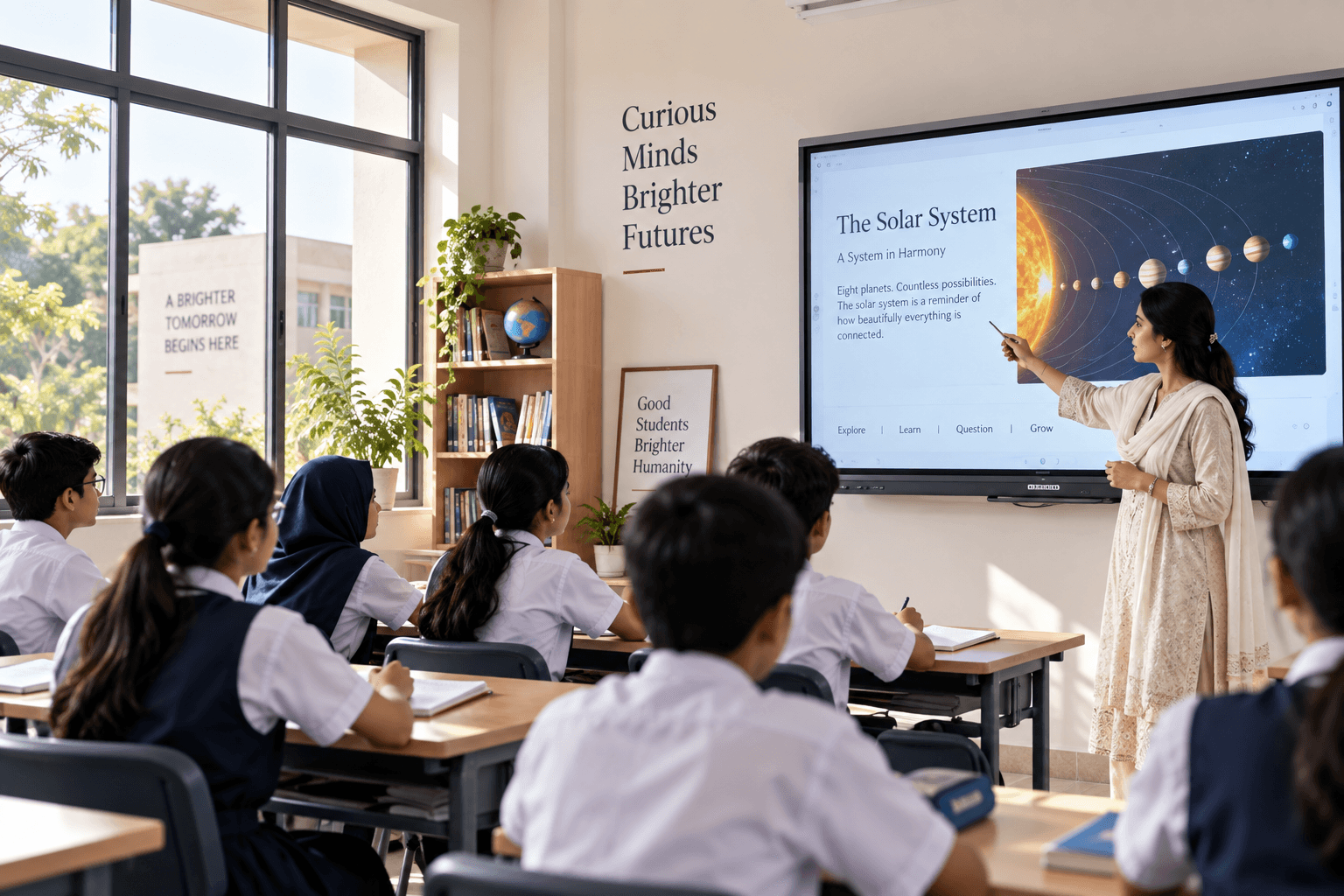
Early Years
Nursery – Kindergarten
The first years of school shape a child’s relationship with learning for life. In Early Years, our focus is simple — help children feel safe, curious, and confident in a structured, warm environment.
- Foundational literacy and numeracy through play and guided activity
- Language development in English, with attention to listening and speaking
- Motor skills, rhythm, and physical confidence through structured movement
- Social and emotional learning — sharing, patience, and care for others
- Gentle introduction to values, routine, and classroom discipline
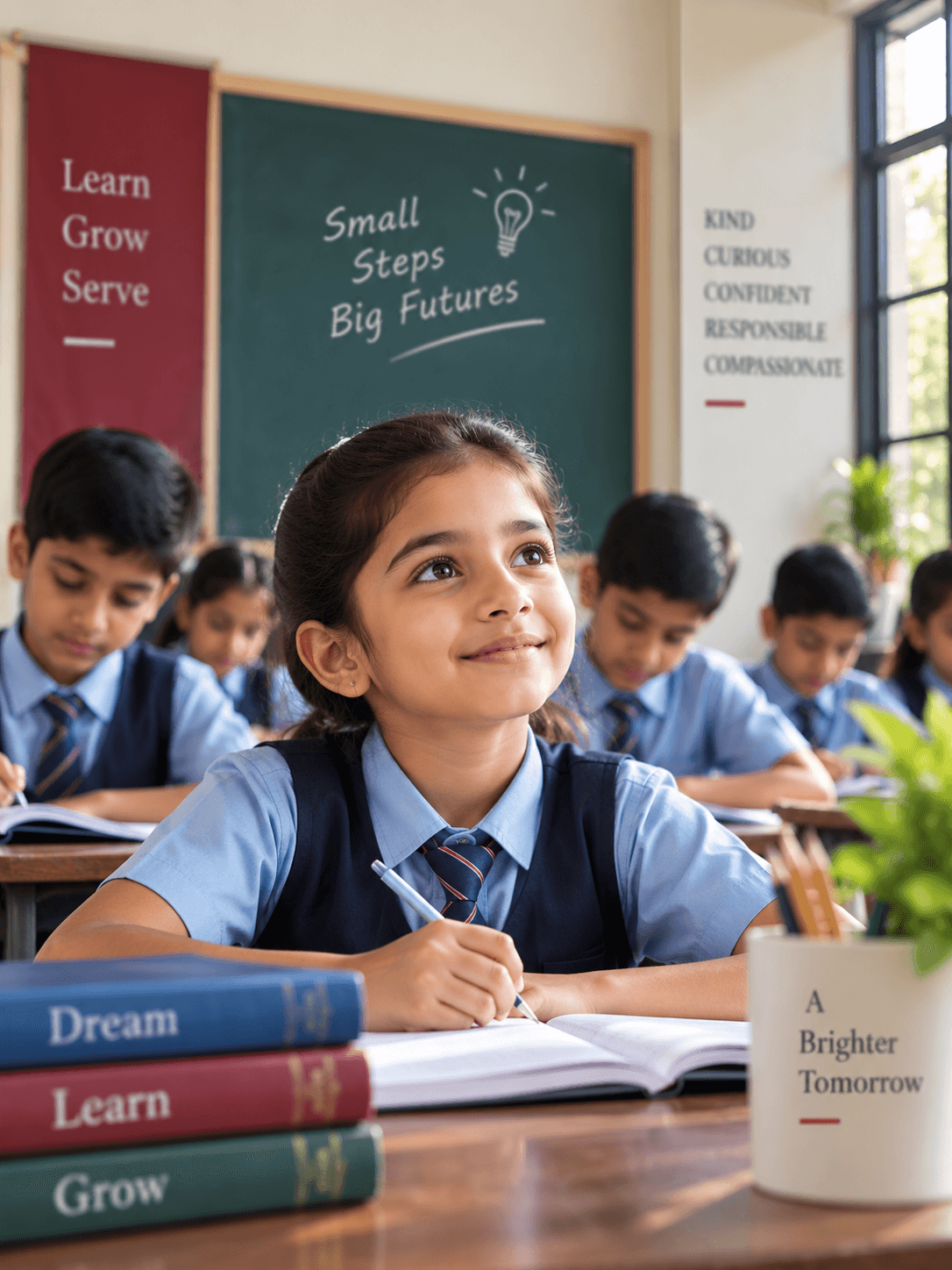
Primary School
Classes 1 – 5
In Primary School, children move from learning to read and count into reading to learn and reasoning with numbers. This is where conceptual understanding takes root and the foundations for later subjects are laid.
- English language and reading comprehension with a strong emphasis on expression
- Mathematics taught conceptually — patterns, reasoning, and problem solving
- Environmental awareness and early scientific observation
- Regular reading practice supported by the school library
- Co-curricular engagement in sport, art, and group activities
- Character formation — honesty, responsibility, and respect for others

Middle School
Classes 6 – 8
Middle School prepares students for the years ahead — academically and personally. Subject depth increases, independent study is encouraged, and children are asked to reason, write, and think more clearly.
- Subject-based learning in language, mathematics, science, and social studies
- Laboratory work and hands-on activity that anchors theory in practice
- Extended writing, structured reading, and oral presentation
- Independent study habits, time management, and self-discipline
- Leadership and responsibility through group projects and school activities
- Continued attention to values, conduct, and physical development
Education that reaches
past the syllabus.
A child’s growth is not measured only by what they can write in an examination. Sport, creativity, and conduct are as much a part of the school day as lessons — because they shape how a person lives.
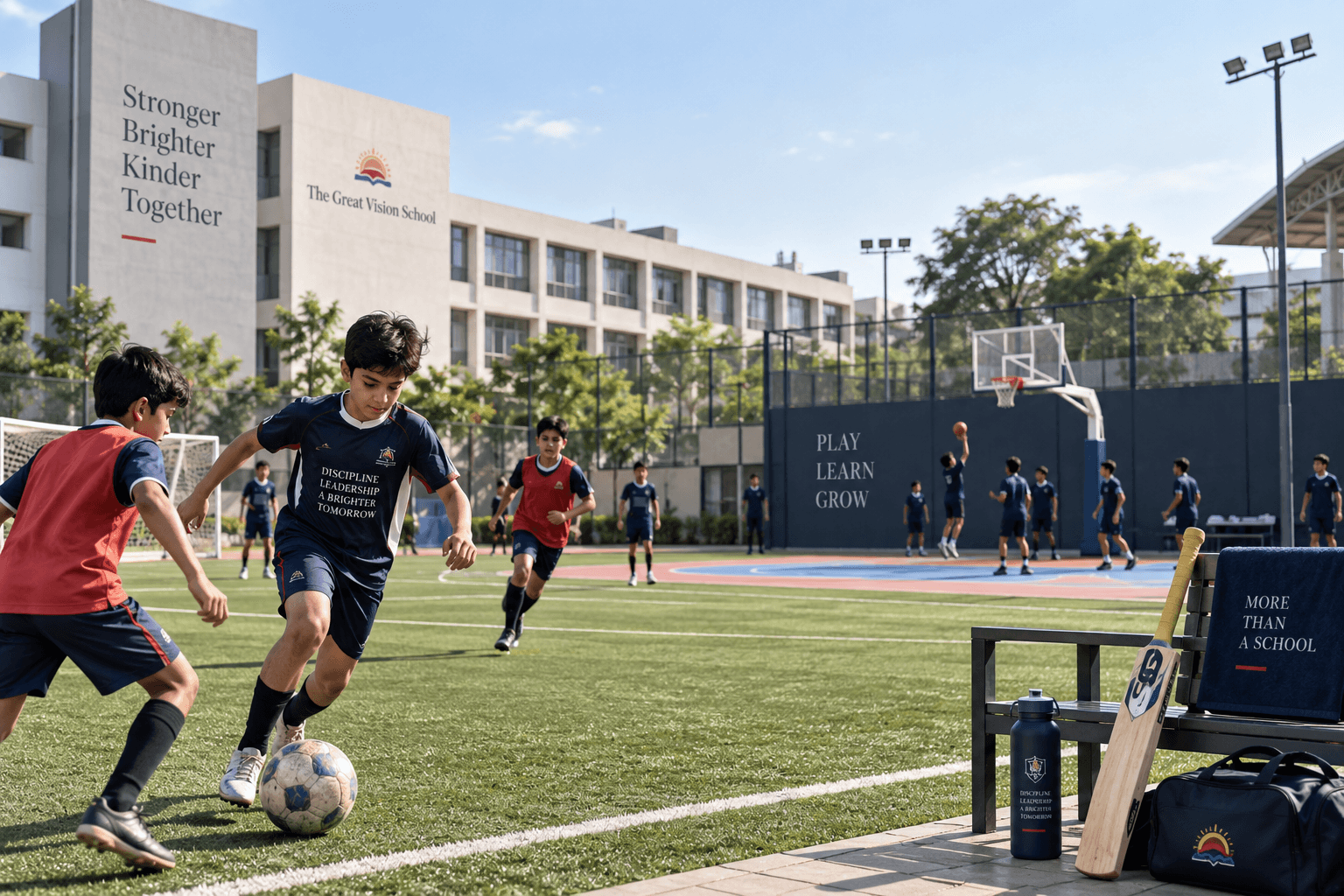
Sport and physical life
Regular physical activity and team sport, treated as part of education — not an interruption of it.
Creative and cultural activity
Opportunities for expression through art, music, and group performance within the school programme.
Values and conduct
Character formation practised daily — through how children are taught to speak, act, and treat one another.
Prepared for the next stage,
not just the next examination.
By the end of Class 8, our aim is that a student leaves the school with strong foundations in language and reasoning, the discipline to study independently, and the character to carry forward — into the next stage of their education, and into the life they will build.
CBSE Pattern · English Medium · Nursery – Class 8